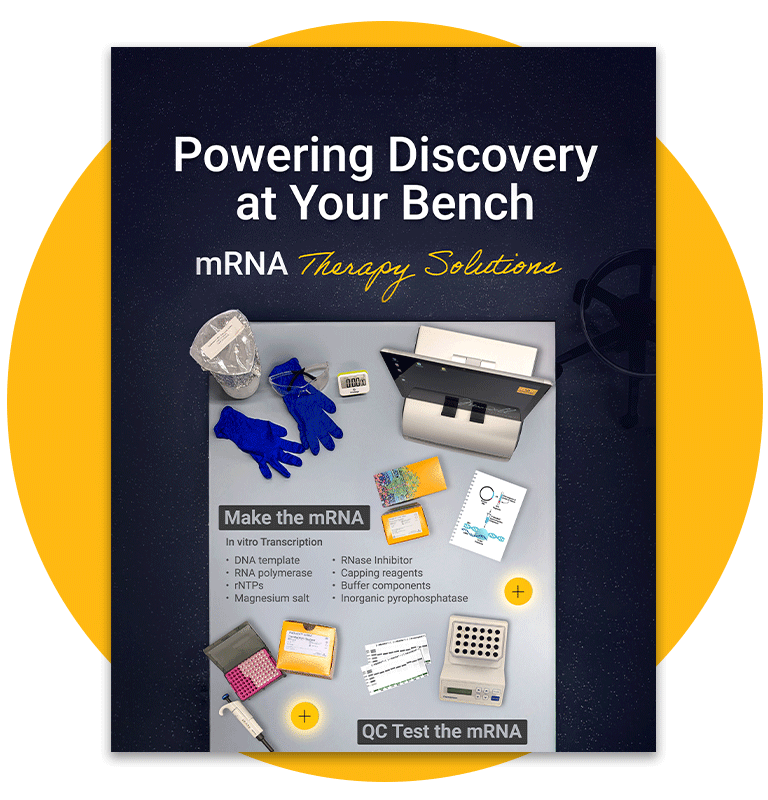
Reagents and Tools for mRNA Therapy Development: IVT, Purification and QC
Interactive Infographic
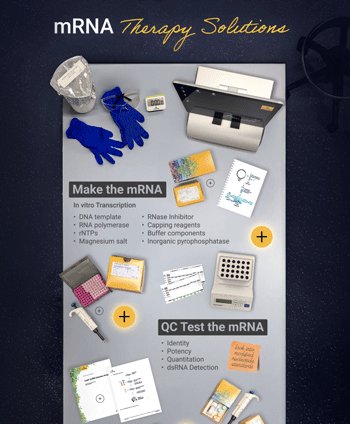
Explore the full mRNA workflow from template DNA to QC testing. Tap to launch the interactive infographic.
Key Takeaways
- Coverage of critical workflow steps: manufacturing, purification and analytical QC in a single portfolio
- RiboMAX™ systems scale from 0.1ml to 10ml reactions with consistent mg-level RNA yield
- ProNex® Size-Selective Purification System provides automation-compatible magnetic bead-based mRNA purification
- Animal-origin-free IVT reagents available for therapeutic mRNA manufacturing
- dsRNA contaminant detection: novel, antibody-free quantification with Lumit® dsRNA Detection Assay
What Reagents Are Needed for mRNA Production?
mRNA production requires a DNA template, RNA polymerase, rNTPs, capping reagents, magnesium salts, and RNase inhibitor. Promega's RiboMAX™ systems provide all components for in vitro transcription (IVT), with options for scalable reaction volumes, animal-origin-free raw materials, and co-transcriptional capping.
Our solutions to support mRNA therapeutic manufacturing cover the complete workflow, including template plasmid DNA creation, mRNA production by in vitro transcription (IVT), and RNA purification. In addition, we offer custom and cGMP manufacturing options for those companies who wish to work with an experienced manufacturing partner.
Explore solutions for: in vitro transcription | mRNA Purification
In Vitro Transcription (IVT)
RiboMAX™ RNA production systems provide all the components and buffers needed for in vitro mRNA synthesis, including RQ1 RNase-Free DNase for digesting the template DNA after the IVT reaction.
The T7 RiboMAX™ Express Large-Scale RNA Production System is an IVT system designed for the consistent production of large amounts of RNA in a short amount of time. Milligram amounts of high-quality RNA transcripts up to 14kb have been generated using this kit.
The RiboMAX™ Large-Scale RNA Production Systems can synthesize large quantities of capped or uncapped RNA transcripts up to 23kb and incorporate modified nucleotides into transcripts.
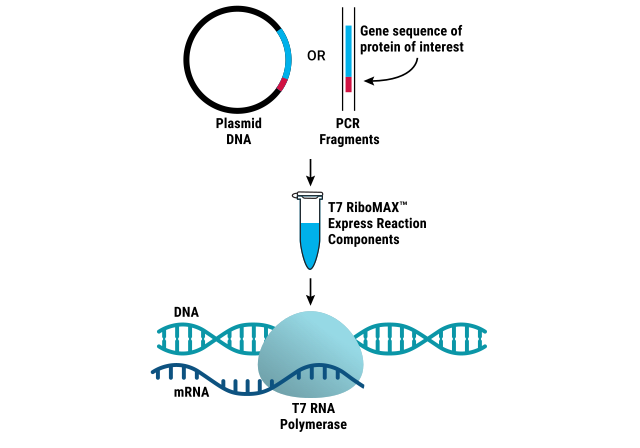
Principle of the T7 RiboMAX™ Express Large-Scale RNA Production System.
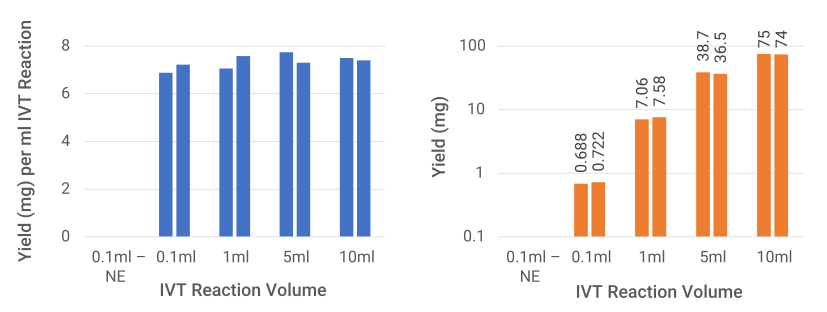
RNA yield from RiboMAX™ IVT reactions is scalable up to at least 10ml. Yield per milliliter of IVT reactions (left) and total yield (right) are shown. Each replicate RiboMAX™ reaction is represented as an individual bar. RiboMAX™ IVT reactions were prepared according to the protocol described above. 100μl, 1ml, 5ml, and 10ml reactions were prepared in duplicate with the T7 Linear Control DNA (Cat.# P141A) as template (100μg/ml of reaction). 100μl no RNA Polymerase controls were also prepared (0.1ml – NE). Transcription reactions were incubated at 37°C for 4 hours. After transcription, RiboMAX™ reactions were diluted 100X in Nuclease-Free Water and assayed using the Qubit™ RNA BR Assay (Invitrogen) with 10μl of sample.
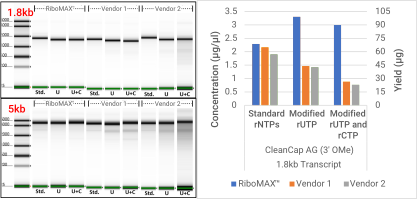
Comparison of large-scale IVT kits. The RiboMAX™ Large Scale RNA Production System-T7, Vendor 1, and Vendor 2 were used to synthesize 1.8kb luciferase transcripts and 5kb run-off transcripts containing standard nucleotides (Std.), N1-methylpseudo-UTP (U), and N1-methylpseudo-UTP + 5-methyl-CTP (U+C). Transcripts were co-transcriptionally capped using CleanCap® Reagent AG (3’ OMe) according to the protocol described here. Left: Transcription products were diluted 1:100 in Nuclease-Free Water and analyzed using the RNA ScreenTape Assay. The resulting gel images are displayed for transcripts synthesized using each kit. Bands are scaled to the highest peak in each lane (scaled to sample). Right: 1.8kb transcripts were purified using a column-based RNA cleanup kit and quantified using the QuantiFluor® RNA System (Cat.# E3310). Resulting purified 1.8kb transcript concentrations and yields are displayed.
Compare IVT Kits
| Feature | RiboMAX™ Express T7 | RiboMAX™ Large-Scale T7 | RiboMAX™ AOF System |
|---|---|---|---|
| Reaction scale | 0.1–10 ml | 0.1–10 ml | 0.1–10 ml |
| Modified nucleotides | — | ✓ | ✓ |
| Co-transcriptional capping | ✓ | ✓ | ✓ |
| RNA yield (per 1ml reaction) | High (5–8.5mg) | Medium (2–5mg) | High (>5mg) |
| Reaction time | 30 minutes | 2–4 hours | 1 hour |
| AOF/cGMP reagents | — | — |
✓ |
cGMP and Animal-Origin-Free IVT Reagents
Does your mRNA production work require bulk quantities, unique formulations, or tailored product sizes and formats to meet your specific needs? Learn about our raw materials for therapeutic mRNA manufacturing.
- Animal-Origin-Free Production – Animal-origin-free manufacturing processes and raw materials.
- Contamination Testing – Reduces the risks associated with contaminants that can potentially impact yield and quality of in vitro transcribed product.
- Quality Documentation – Certificate of Analysis, Certificate of Origin and TSE/BSE Statements available upon request.
How Is mRNA Purified After In Vitro Transcription?
After the IVT reaction, mRNA must be separated from reaction components that could inhibit downstream applications. Magnetic bead-based purification offers a simple, fast, automation-compatible method that also concentrates the mRNA sample for higher yields.
mRNA Purification
After the IVT reaction, mRNA needs to be purified from the reaction mixture so that reaction components do not inhibit downstream applications for the mRNA. The purification process also concentrates the mRNA. The ProNex® Size-Selective Purification System is a magnetic bead-based technique that can provide a simple, fast, effective and automation-friendly method for RNA purification.
Side-by-Side Comparison of Magnetic Bead-Based RNA Purification
| Criterion | ProNex® System | RNAClean® XP Kit |
|---|---|---|
| Automation-compatible | ✓ | Partial |
| Size-selective | ✓ | ✓ |
| Single-tube protocol | ✓ | ✓ |
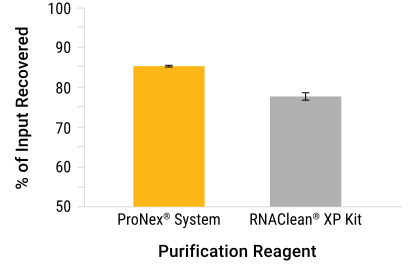
Side-by-side comparison of two magnetic bead-based RNA purification chemistries. Fifty microliters of pre-purified RNA was purified with the ProNex® Size-Selective Purification System and a competitive kit using the manufacturer's recommended protocols.
What Analytical and QC Assays Are Required for mRNA Therapeutics?
mRNA therapeutic development requires QC assays for identity, potency, quantitation, and dsRNA impurity detection. These measurements apply from research-stage workflows through manufacturing and lot-release testing, addressing regulatory expectations for safety and efficacy.
Impurity Detection
One common impurity in IVT reactions is a byproduct, double-stranded RNA (dsRNA). dsRNA is highly immunogenic, and it can be detected by several intracellular or endosomal sensors, leading to inflammation, translation inhibition and cell death. Therefore, it is important to detect and minimize the amount of dsRNA in mRNA produced for therapeutic uses. Existing methods to detect dsRNA in mixed solutions lack quantitation and sensitivity.
We have developed two novel assay systems for dsRNA detection and quantitation using bioluminescence: the Lumit® dsRNA Detection Assay and the TLR3 Reporter Bioassay.
Lumit® dsRNA Detection Assay
Novel, antibody-free approach to detect dsRNA. Compatible with modified nucleotide IVT reactions, uses a protocol with no wash steps and avoids immobilization artifacts.
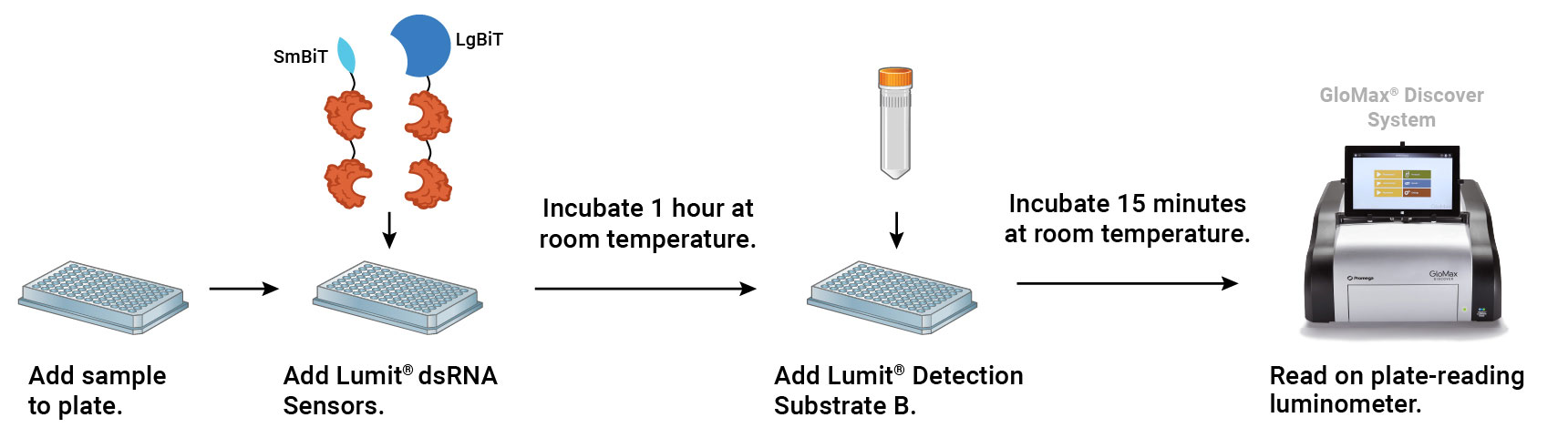
Principle of the Lumit® dsRNA Detection Assay. The assay detects dsRNA using dsRNA binding domains (DRBDs) genetically fused to SmBiT and LgBiT. Dimerization of the BiT-DRBDs on dsRNA induces complementation of NanoBiT® luciferase and generation of light.
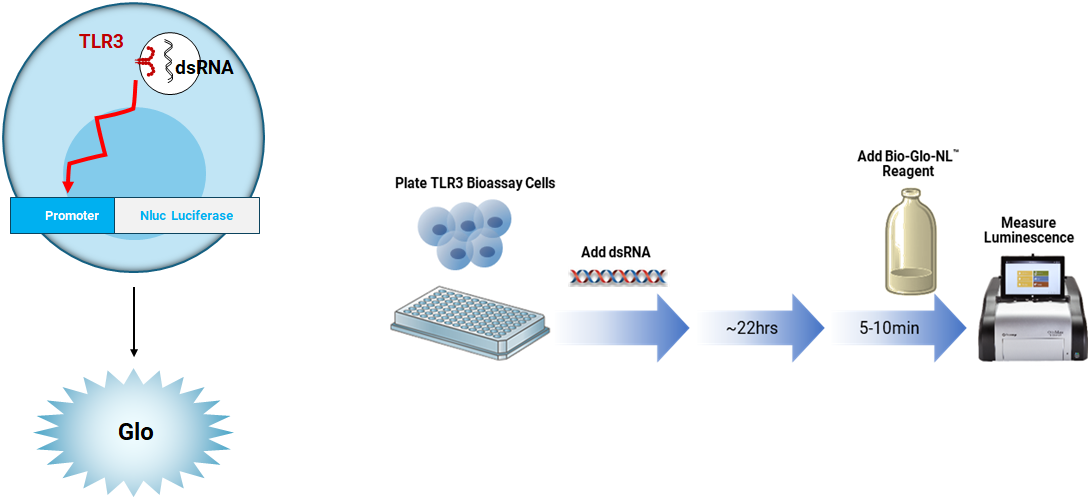
Principle of the TLR3 Bioassay. The assay measures the potency and stability of agonists designed to activate TLR signaling. Treatment with a TLR agonist results in promoter-driven luminescence that can be detected and quantified using Bio-Glo-NL™ Reagent.
dsRNA Detection Methods Compared
| Method | Detection Principle | Workflow | Assay Time | Quantitation | Consistency |
|---|---|---|---|---|---|
| Lumit® dsRNA Assay | NanoBiT® complementation | No wash, add-mix-read | 90 minutes | Concentration-dependent luminescence | Uniform across dsRNA sequence |
| TLR3 Reporter Bioassay | TLR3-specific cell-based signaling assay | Thaw-and-use cells. No cell culture | 24 hours | Functional cell signaling | Differentiates dsRNA sequence |
| ELISA/Dot blot | Antibody-based | Lengthy, multiple wash steps | Hours | Highly dependent on antibody quality | Poor due to dsRNA species variation |
Quantitation
Accurate quantitation of mRNA is important for therapeutic applications. We offer fluorescent RNA detection reagents that pair with sensitive detection instruments for single samples or microplates.
QuantiFluor® RNA Select System
- Fluorescent quantitation of RNA with "Add-and-Read" convenience that is ideal for sequencing applications
- Specifically quantitates RNA in complex biological samples so researchers confidently measure RNA without interference from DNA
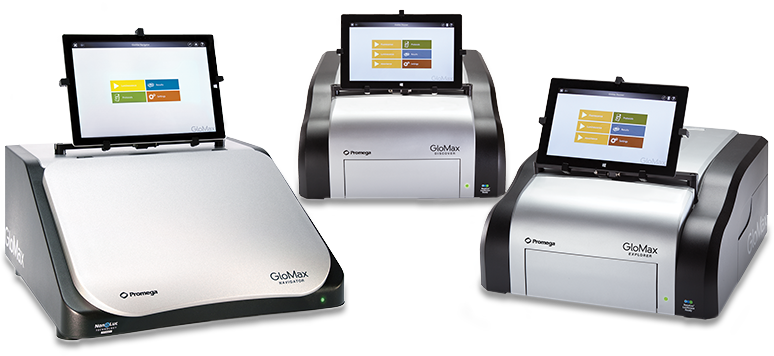
- Detection on microplates with the GloMax® Instruments or single tubes with the Quantus™ Fluorometer
In Vitro Translation
in vitro translation is often used to characterize mRNA products. Rabbit Reticulocyte Lysate System, Nuclease Treated and Wheat Germ Extract contain energy-regenerating systems that are optimized for translation and ready to use for in vitro translation of mRNAs. Both were shown to be able to generate full length proteins using capped mRNA with and without modified nucleotides.
Transcend™ tRNA is a precharged, biotin-labeled, lysine tRNA that can be used with in vitro translation systems to tag a protein for nonradioactive detection.
Cell-based Assays
mRNA Transfection
ViaScript mRNA transfection reagent allows for uniform, titratable expression across the cell population with high transfection efficiency in challenging cell lines and minimal cell toxicity.
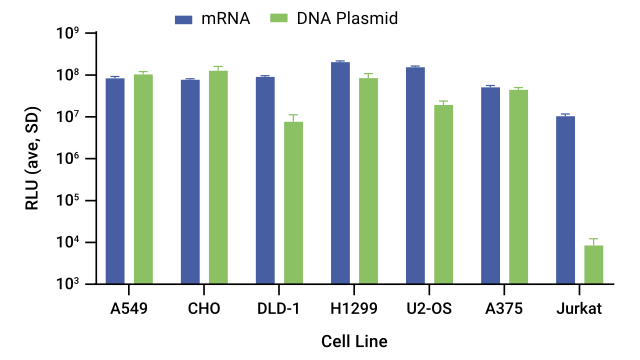
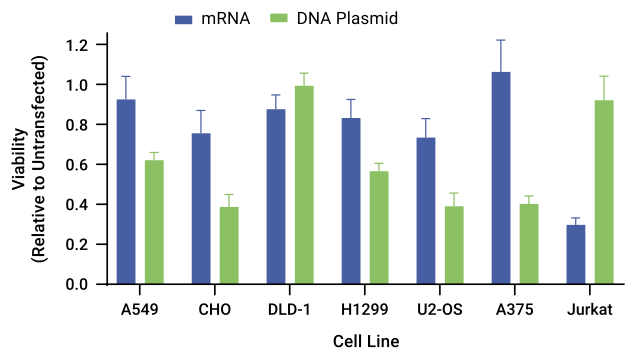
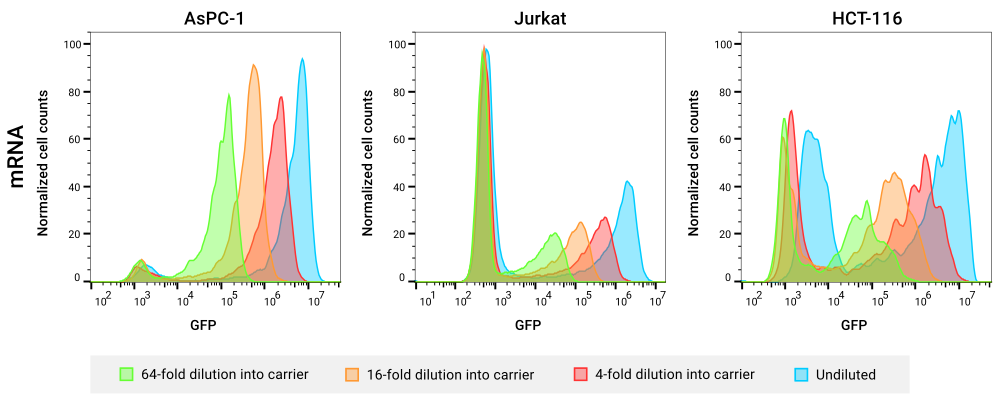
ViaScript® mRNA Transfection Reagent achieves high mRNA transfection efficiency with minimal cell toxicity, outperforming DNA transfection in multiple cell lines. A549, CHO, DLD-1, H1299, U2-OS, A375 and Jurkat cells were transfected with mRNA or DNA plasmids. Transfection efficiency was assessed by luminescence, showing strong expression with mRNA transfection. Cell viability remained high across most cell lines, demonstrating the reagent’s low toxicity.
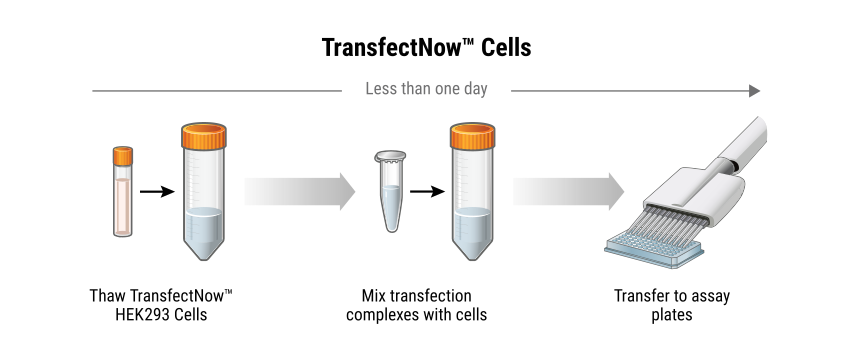
TransfectNow™ HEK293 Cells are reliable, thaw-and-Use, ready-to-transfect HEK293 cells that save time, reduce consumables needed for continuous culture and improve transfection consistency.
Functional Assays
We offer a broad portfolio of functional assays that were developed based on sensitive bioluminescence technology. These assays include luciferase reporter assays, simple no-wash immunoassays, enzyme activity and binding assays, and much more.
These assays have been used for functional validation, target-specific potency testing, immunogenicity testing, QC lot release and much more.
Custom Potency Assay Development
Our bioassay development and services include new assay development, modification of existing assays, bioassay optimization and qualification, biologic drug profiling and custom cell manufacturing.



Precision and Support at Critical Steps of mRNA Development
From in vitro transcription to quality control testing, mRNA therapy development requires precision and reliability at every stage. This interactive infographic highlights some of our solutions to streamline research, optimize workflow efficiency, and ensure consistent quality throughout the mRNA development process.